

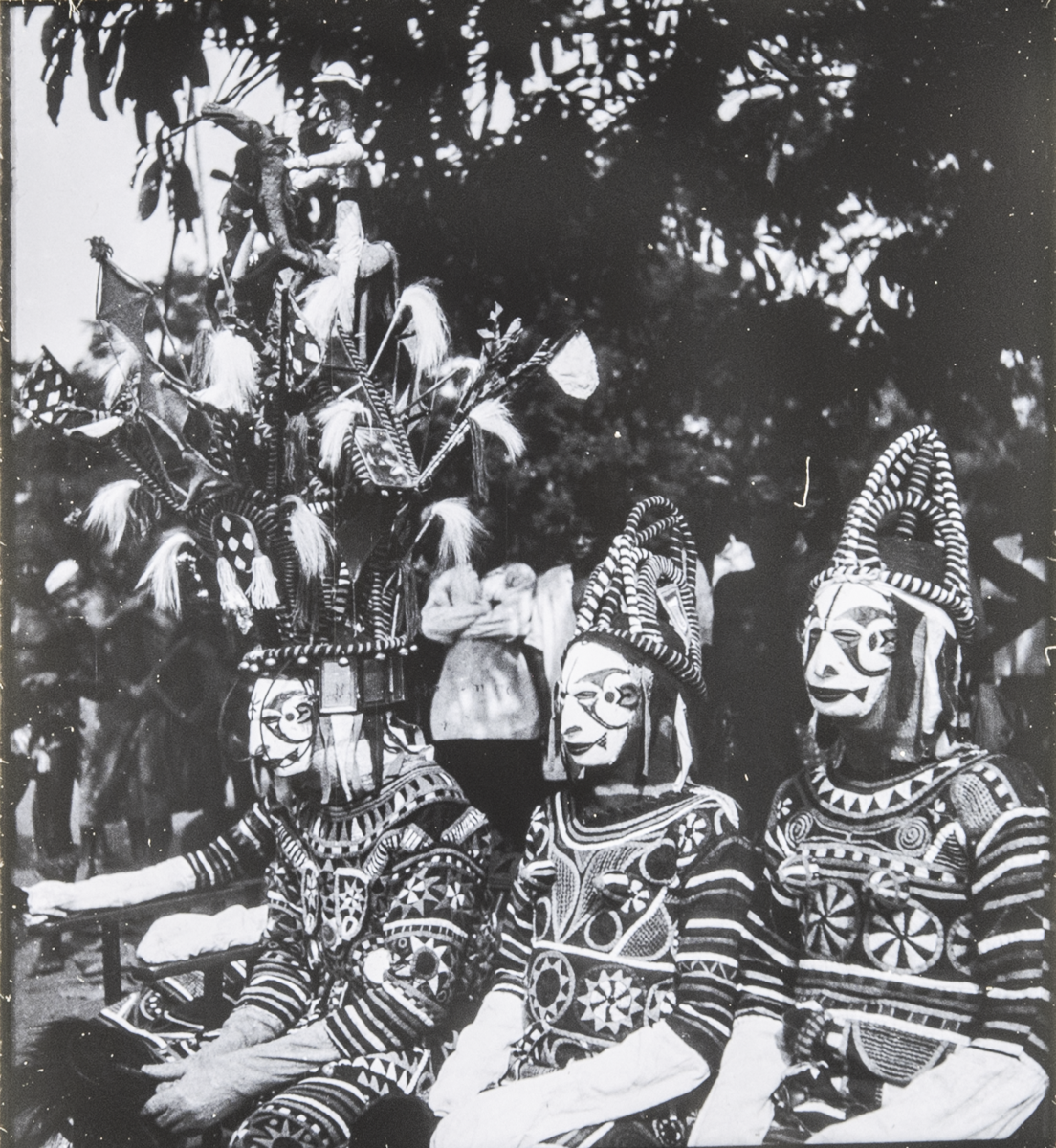
Group Leading Masks for Boys Initiation
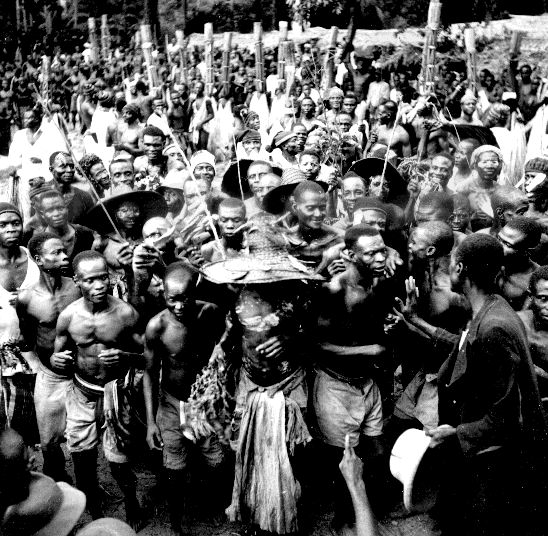
A black-and-white photograph depicting a boys' initiation ritual in Nkporo. The central figure wears a voluminous, textured headpiece and layered, patterned textiles that hang from the torso to the lower legs. A high-density gathering of primarily male individuals surrounds the figure, displaying a variety of attire ranging from minimalist waist-wraps and loincloths to Western-style jackets. The scene is set in an outdoor natural environment with tall, slender vertical poles and foliage in the background, reflecting the cultural practices of the Nkporo people.
Community Notes

Onyeka Nwokike
Oct 22, 2026
The rituals depicted involve the Isiji trainees of the Egbela warrior society in Nkporo. These initiates undergo a structured age-grade system spanning several years, a practice that is part of a larger Cross River cultural complex including neighboring communities such as Abiriba, Afikpo, and Ohafia, as described in Dancing with History: Exploring the Nkporo Cultural Heritage through G. I. Jones Lens.
Onyeka Nwokike
Oct 22, 2026
Masks used during these initiations are often crafted from raffia and calabash. Junior members are typically draped in sacred tender palm fronds known as òmụ. Specific mask classifications identified in the Jones Archive include the Ofogu (or Ovu) mask, noted for its tall, cylindrical headdress, the Nwanyi Oma (Beautiful Woman), the Ogbo (Clown) mask and band, and the Ogwu mask with its accompanying singers (Ogwu Aba).
Onyeka Nwokike
Oct 22, 2026
Nkporo, historically known as the ancient Okwe Kingdom, is situated in the Ohafia Local Government Area of Abia State. The rituals documented by G.I. Jones occurred across various sub-communities, including the villages of Etiti Ama, Elugu (Elughu), and Obohia (Obofia), according to Wikipedia and Nkporo.org.
Log in to add context.
Explore Further
Discover related books and stories to deepen your understanding.

Art of Eastern Nigeria
By G.I. Jones

Igbo Art And Culture: And Other Essays
By Simon Ottenberg

Igbo Arts: Community and Cosmos
By Herbert M. Cole and Chike G. Aniakor

Igbo (Visions of Africa Series)
By Herbert M. Cole

The Asaba Massacre: Trauma, Memory, and the Nigerian Civil War
By S. Elizabeth Bird and Fraser M. Ottanelli

THE DIBIA: Guardians of Ancient Wisdom and Healing in Igbo …
By Solomon Joe

On Black Sisters' Street
By Chika Unigwe
The water goddess in Igbo cosmology
By Sabine Jell-Bahlsen

IGBO NAMES AND THEIR MEANING (MALE / FEMALE)
By Stanley Nwagwu
You May Also Like
Family Group Along the Niger River
By William Henry Crosse
Exhibition Stall of Local Produce in Southern Nigeria
Royal Niger Company Soldiery
By William Henry Crosse
Okike, Ikenga and Other Shrines of North Ika
By G.I. Jones
Landscape with Buildings and Trees along the Niger River
By William Henry Crosse
Settlement along the Niger River
By William Henry Crosse
Onu Kamma Masqueraders at Nimo
By G.I. Jones
Pyramids at the Nsude Village Shrine, Abaja Igbo, Northern Igbo
By G.I. Jones
Obugulu Mau Masqueraders at Amobia Village
By G.I. Jones
No comments yet. Be the first to share your thoughts!