

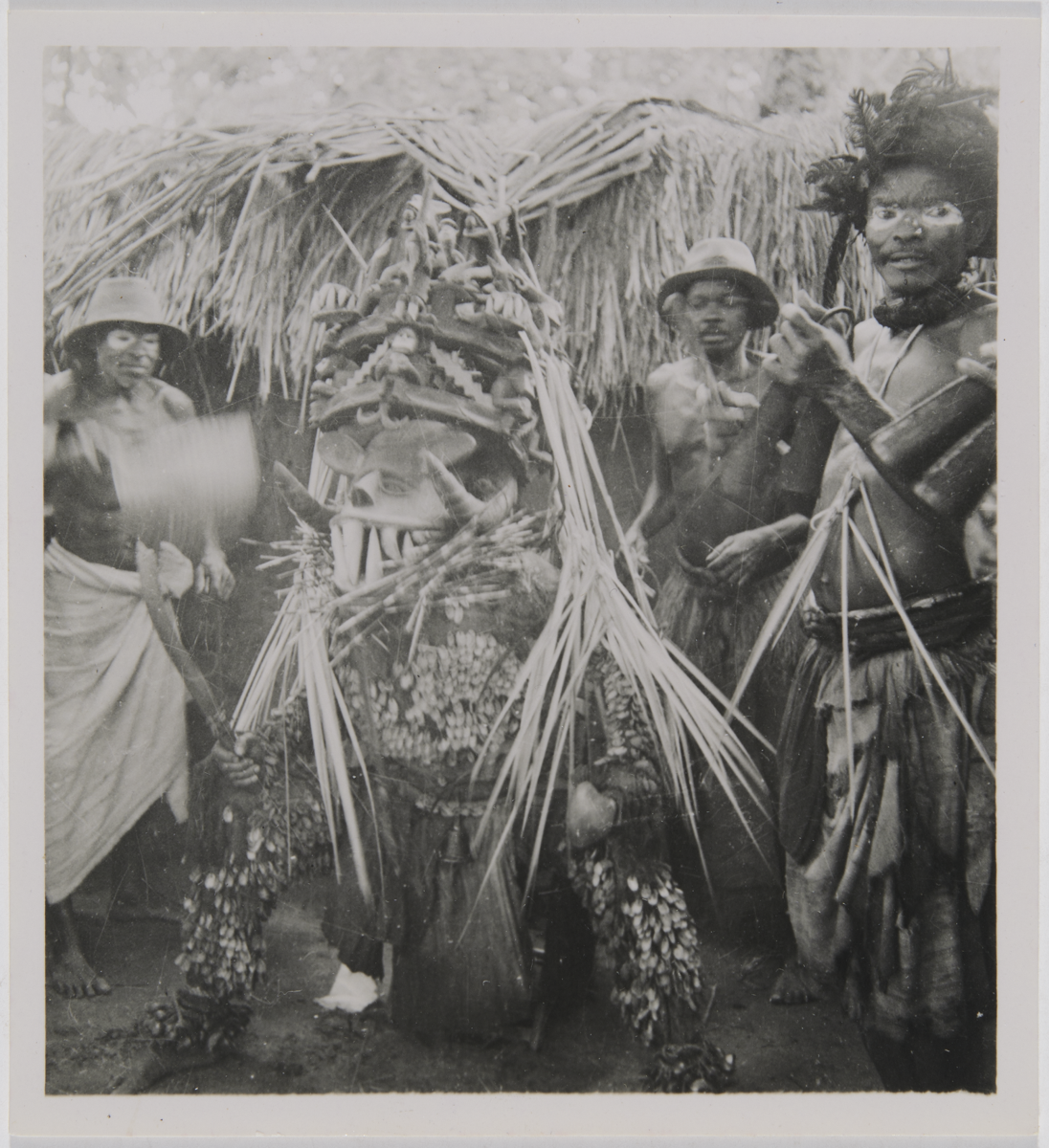
Dancing Initiation Masks, Boys Initiation
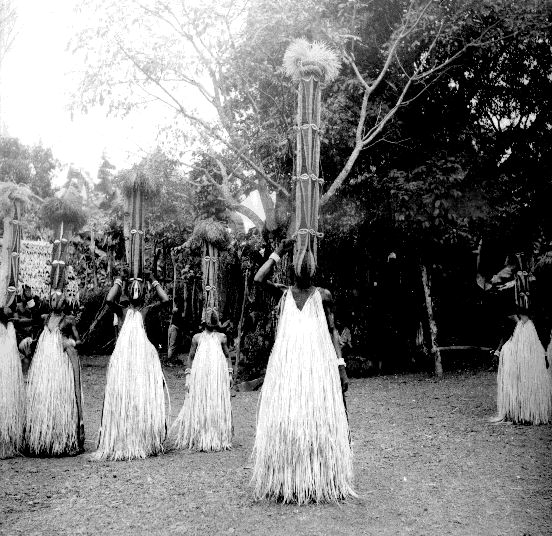
A photograph depicting a group of human figures in an outdoor, earthen clearing during a boys' initiation ceremony. The subjects wear voluminous, conical skirts made of light-colored, vertical fibrous strands, likely raffia or straw, extending from the waist to the ground. The most prominent feature is the series of tall, cylindrical headdresses extending upward, constructed from wrapped material and segmented by horizontal bands, each capped with a tuft of fibrous or feathery material. The scene is set against a background of dense vegetation, with subjects viewed from the rear or side, highlighting the ceremonial regalia. The image is a monochrome photograph consistent with mid-20th-century analog film processes.
Community Notes

Onyeka Nwokike
Oct 19, 2026
The ceremonies depicted involve the Isiji trainees of Nkporo's Egbela warrior society, who undergo a structured age-grade system over several years as part of a broader Cross River cultural complex shared with communities such as Ohafia, Abiriba, and Afikpo. The tall, cylindrical headdresses are characteristic of the Ofogu mask (also spelled Ovu), specifically used during boys' initiation rituals in the Etiti Ama quarter of Nkporo. According to Dancing with History: Exploring the Nkporo Cultural Heritage through G.I. Jones' Lens, these masks are crafted from raffia and calabash and are often complemented by sacred tender palm fronds known as òmụ. This photograph is part of a series documented in the Nkporo (Igbo) Photograph Index, typically associated with the Etiti Ama or Elugu initiation cycles.
Log in to add context.
Explore Further
Discover related books and stories to deepen your understanding.

Art of Eastern Nigeria
By G.I. Jones

Igbo Art And Culture: And Other Essays
By Simon Ottenberg

Igbo (Visions of Africa Series)
By Herbert M. Cole

THE DIBIA: Guardians of Ancient Wisdom and Healing in Igbo …
By Solomon Joe

The Asaba Massacre: Trauma, Memory, and the Nigerian Civil War
By S. Elizabeth Bird and Fraser M. Ottanelli

Igbo Arts: Community and Cosmos
By Herbert M. Cole and Chike G. Aniakor
The water goddess in Igbo cosmology
By Sabine Jell-Bahlsen

A Grammar of Contemporary Igbo: Constituents, Features and Processes
By E. Nolue Emenanjo

Groundwork of the History and Culture of Onitsha
By S. I. Bosah
You May Also Like
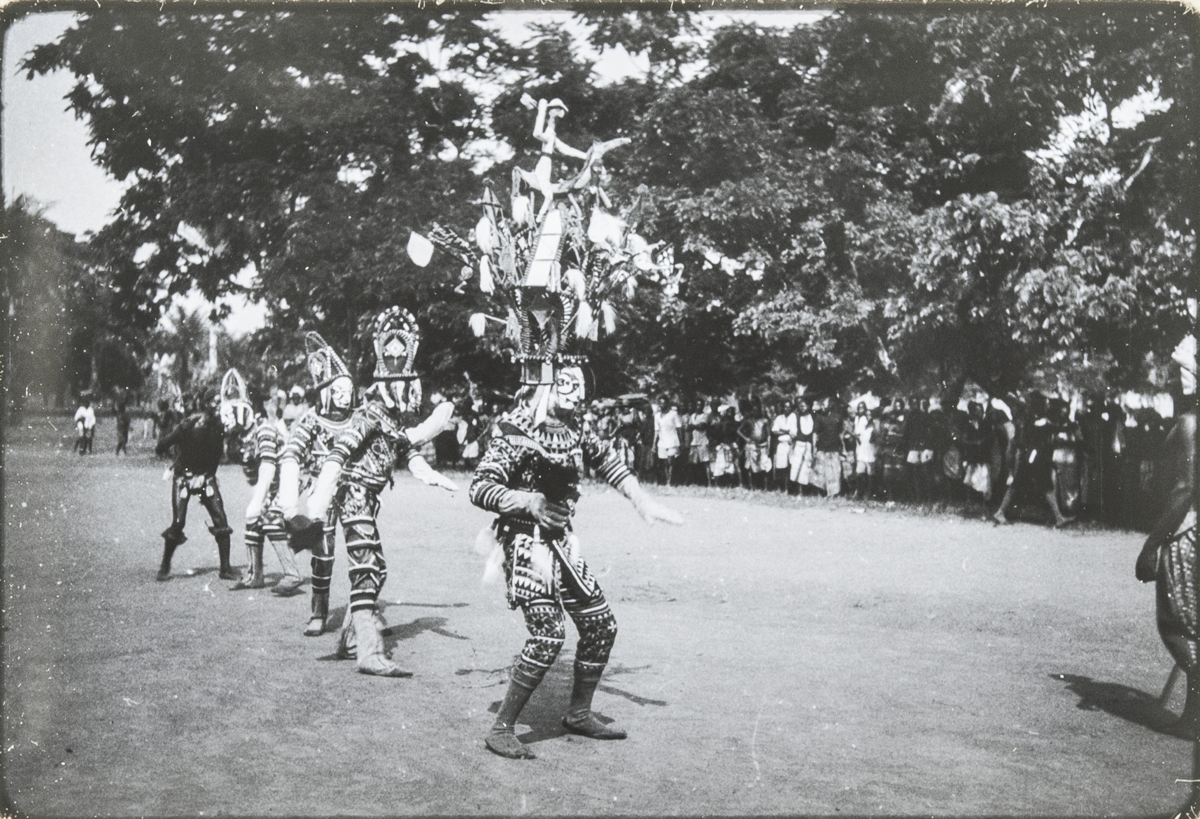
Obugulu Mau Masqueraders in Performance
By G.I. Jones
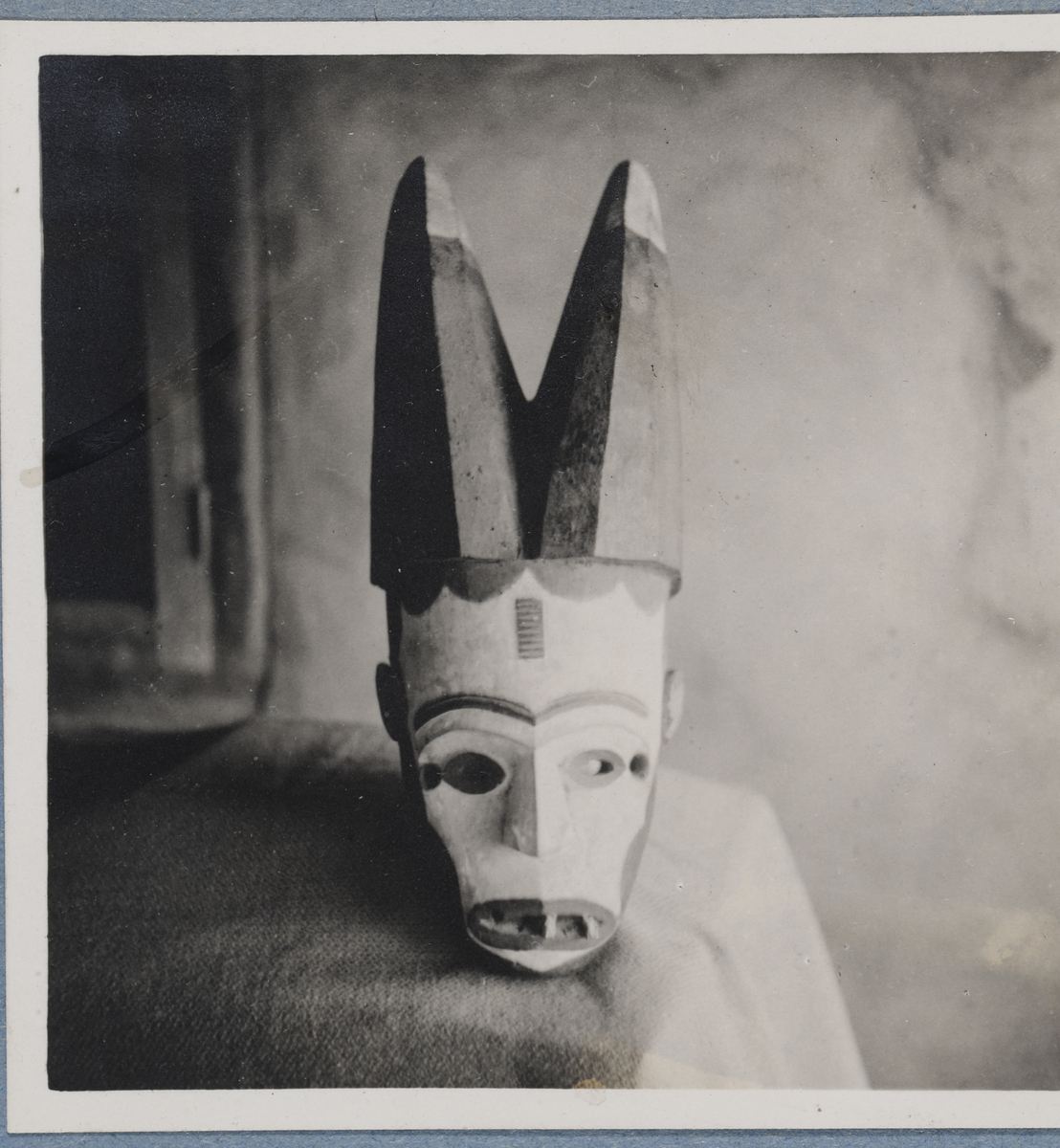
Horned Face Mask from Nri Awka
By G.I. Jones
Standing Igbo Wooden Male Figure
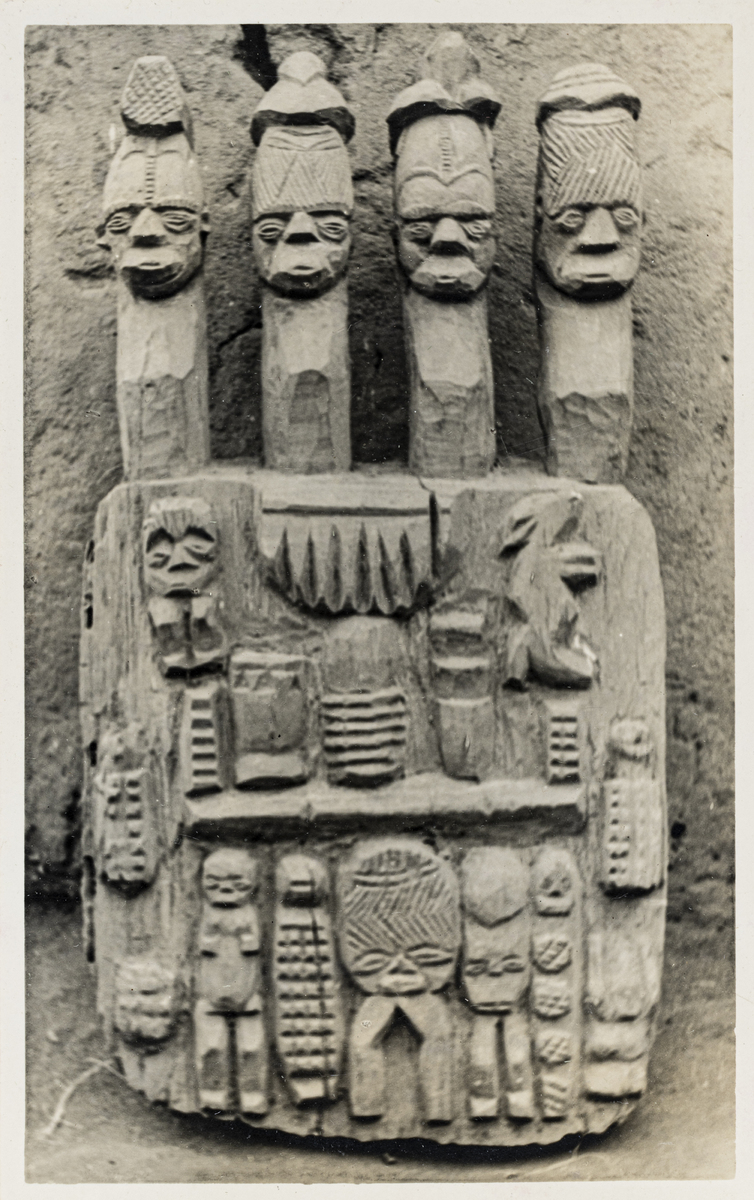
Carved Wooden Ceremonial Board Staff
By Kenneth C. Murray
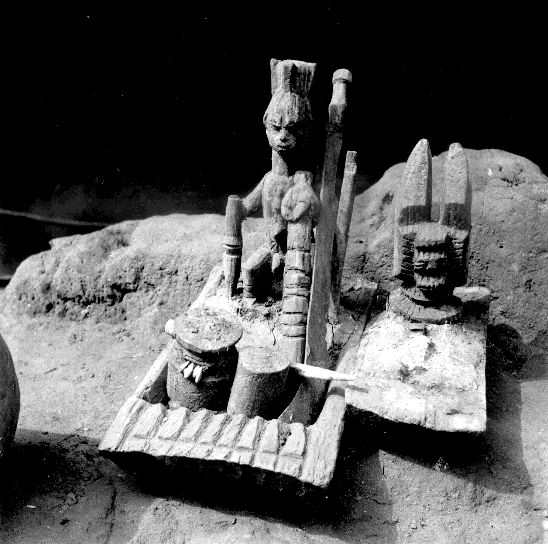
Okike, Ikenga and Other Shrines of North Ika
By G.I. Jones
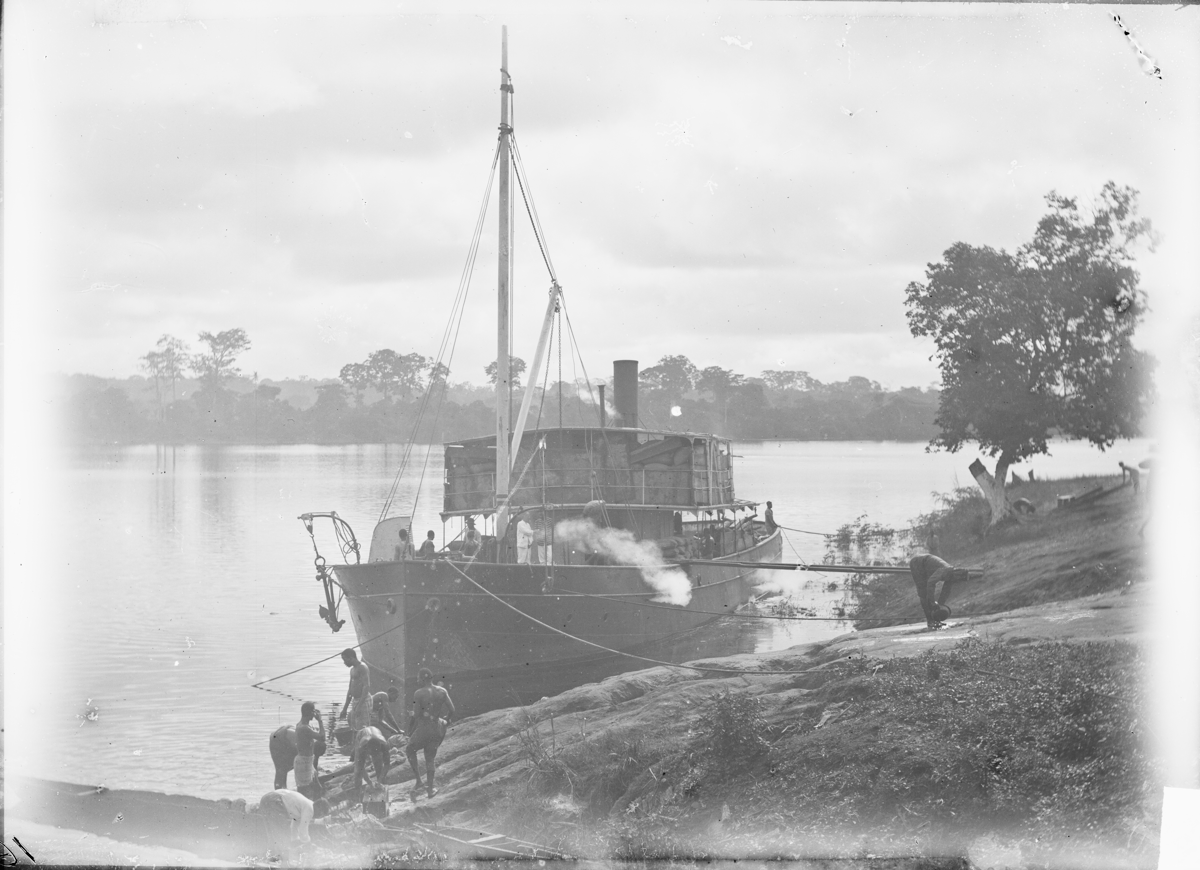
Steam Vessel Anchored on the Niger River
By William Henry Crosse
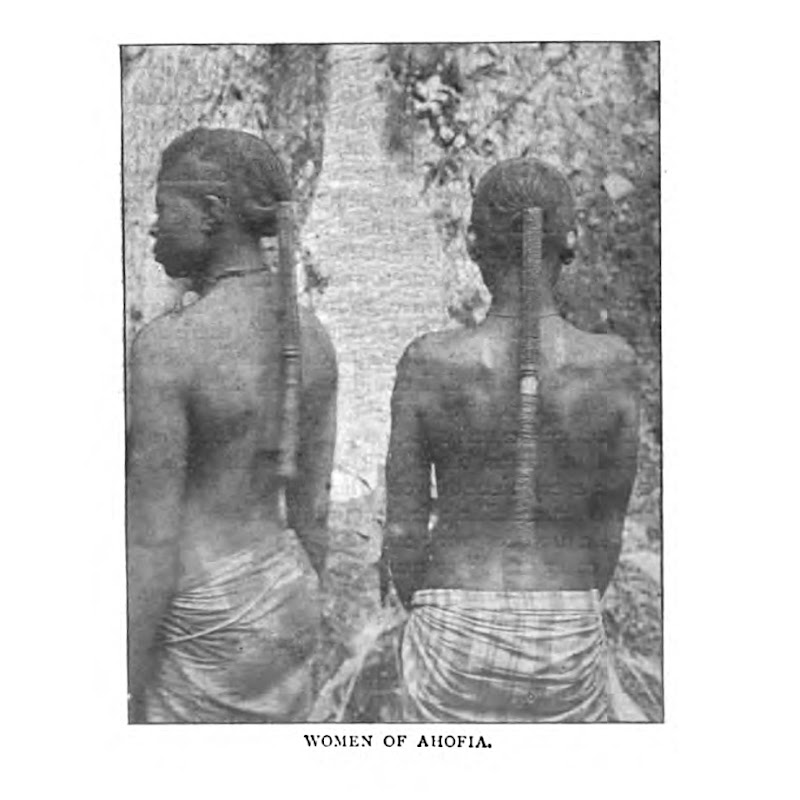
Ohafia Women with Traditional Long Braids
By Rev. William T. Weir
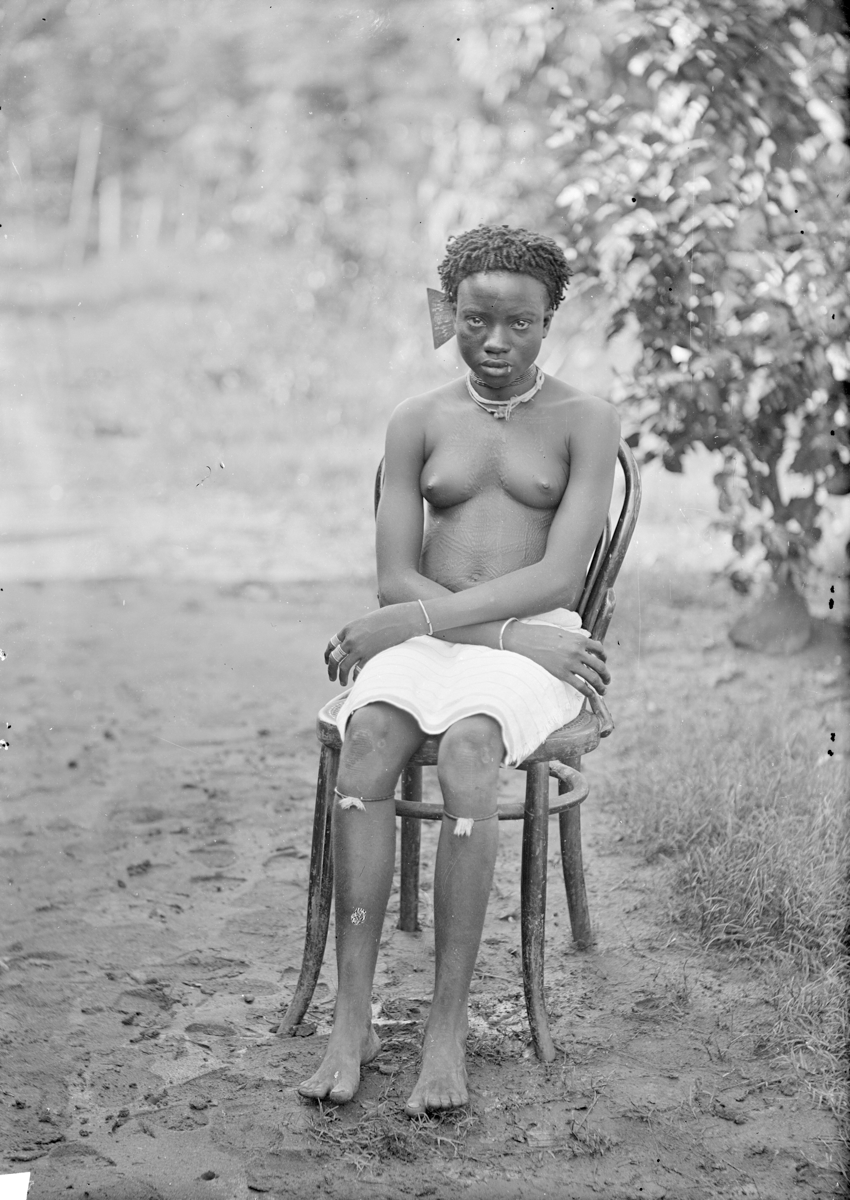
Portrait of a Woman Seated on a Bentwood Chair
By William Henry Crosse
Mgbedike Masquerade from Onitsha Province
By G.I. Jones
No comments yet. Be the first to share your thoughts!