

Construction of Brick Buildings by the Royal Niger Company
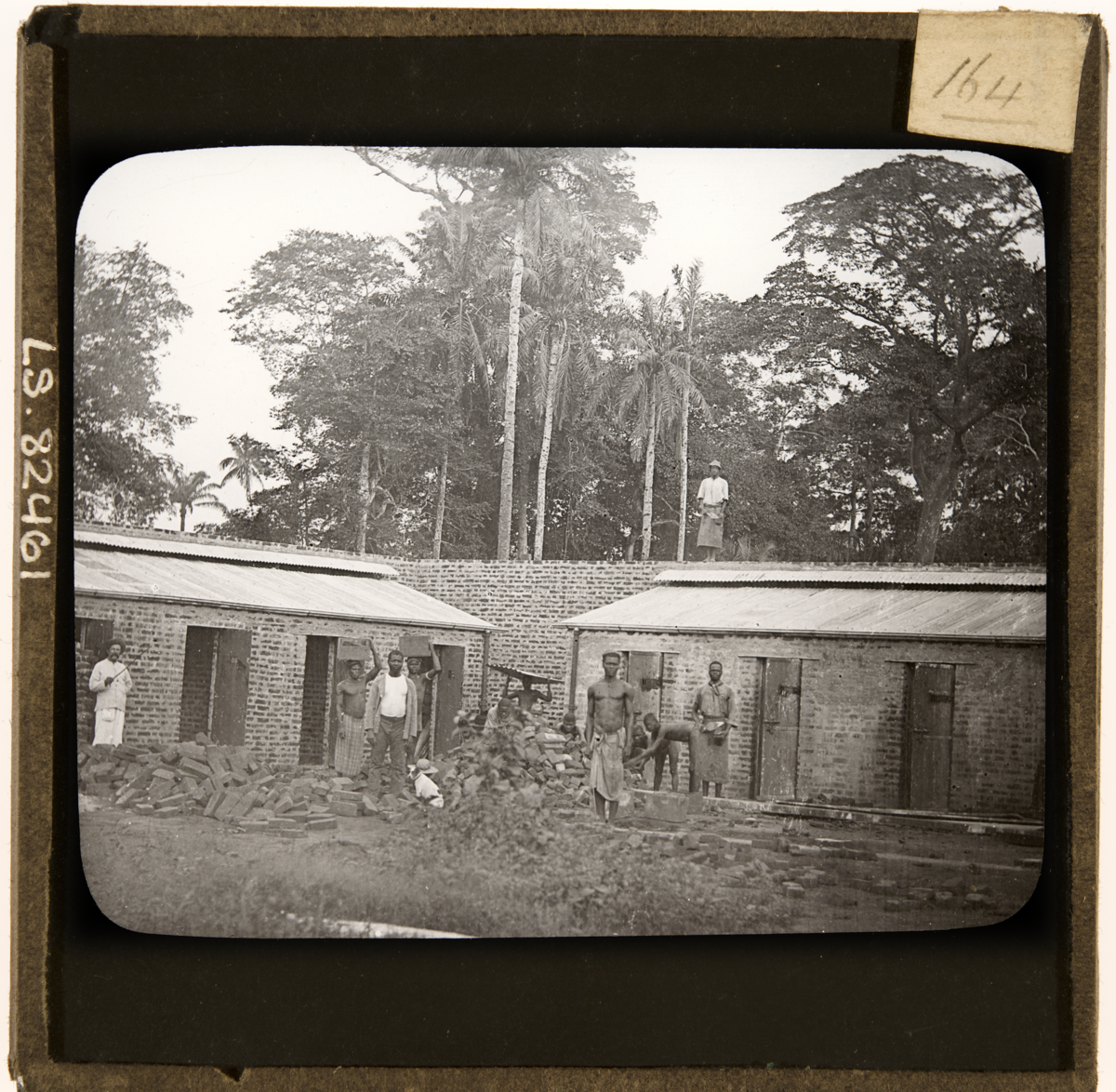
A photograph depicting a construction site featuring two single-story rectangular buildings made of exposed brick with corrugated metal roofs. The scene includes approximately nine individuals: some wearing Western-style buttoned shirts and trousers, and others in traditional wrap-style garments with bare upper torsos. Loose bricks are scattered across the unpaved foreground, and the background consists of dense tropical vegetation with palm species and broad-leafed canopy trees. The image is part of the Crosse Collection, documenting the activities of the Royal Niger Company between 1886 and 1895.
Community Notes

Onyeka Nwokike
Oct 11, 2026
William Henry Crosse, the photographer, authored medical texts including Notes on the Malarial Fevers Met with on the River Niger, West Africa (1892) and Hints, Suggestions and Medical Notes for Those Traveling in West Africa (1903). Some images from his collection were featured in Charles Henry Robinson's 1900 publication, Nigeria: Our Latest Protectorate. Following his death in 1903, the snake species Letheobia crossii was named in his honor.
Onyeka Nwokike
Oct 11, 2026
The use of brick for construction was a hallmark of the Royal Niger Company's efforts to establish permanent administrative and medical stations along the Niger River. This architectural style was particularly prominent in Lokoja, which served as the company's military and administrative headquarters. The differing attire seen in the image, ranging from Western clothing to traditional wraps, illustrates the labor and administrative hierarchies of the colonial era.
Log in to add context.
Explore Further
Discover related books and stories to deepen your understanding.

Trade Winds on the Niger: Saga of the Royal Niger …
By Geoffrey L. Baker

The Rise of British Colonialism in Southern Nigeria, 1700-1900: A …
By Kalu E. Ume

Under the Udala Trees
By Chinelo Okparanta

Lessons From Vernacular Architecture in Nigeria
By Joyce Lodson

The Gospel on the Banks of the Niger: Journals and …
By Samuel Crowther and John Christopher Taylor

An Introduction to Nigerian Traditional Architecture: South-Eastern Nigeria: The Igbo-speaking …
By Z.R. Dmochowski

Encyclopaedia of Igbo Artefacts
By Dandy Ahaoma Ahuruonye

Chike and the River
By Chinua Achebe

Happiness, Like Water
By Chinelo Okparanta
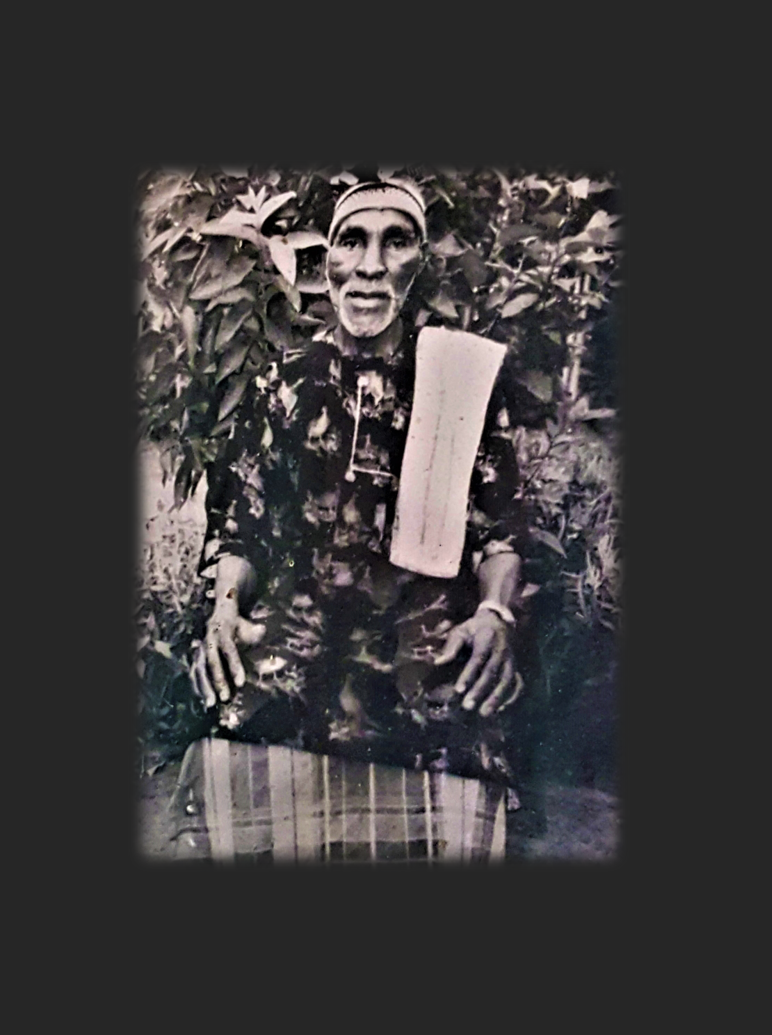
POLYGAMY: THE WAY OF A CHIEF
By Dandy Ahuruonye
You May Also Like
Portrait of a Male Elder with Staff
By G.I. Jones
River Steamer on the Niger River
By William Henry Crosse
Igbo Adult Males Performing Masquerade
Painted Courthouse Mural at Nri
By Edward Harland Duckworth
Landscape of the Niger River
By William Henry Crosse
Royal Niger Company Steam Vessel on the Niger River
By William Henry Crosse
Face Mask Documentation Photograph
By G.I. Jones
Group Portrait from Royal Niger Company
By William Henry Crosse
Trader from Timbuctou and Rich Trading Woman
By G. F. Packer
No comments yet. Be the first to share your thoughts!