

Mgbedike Masquerade
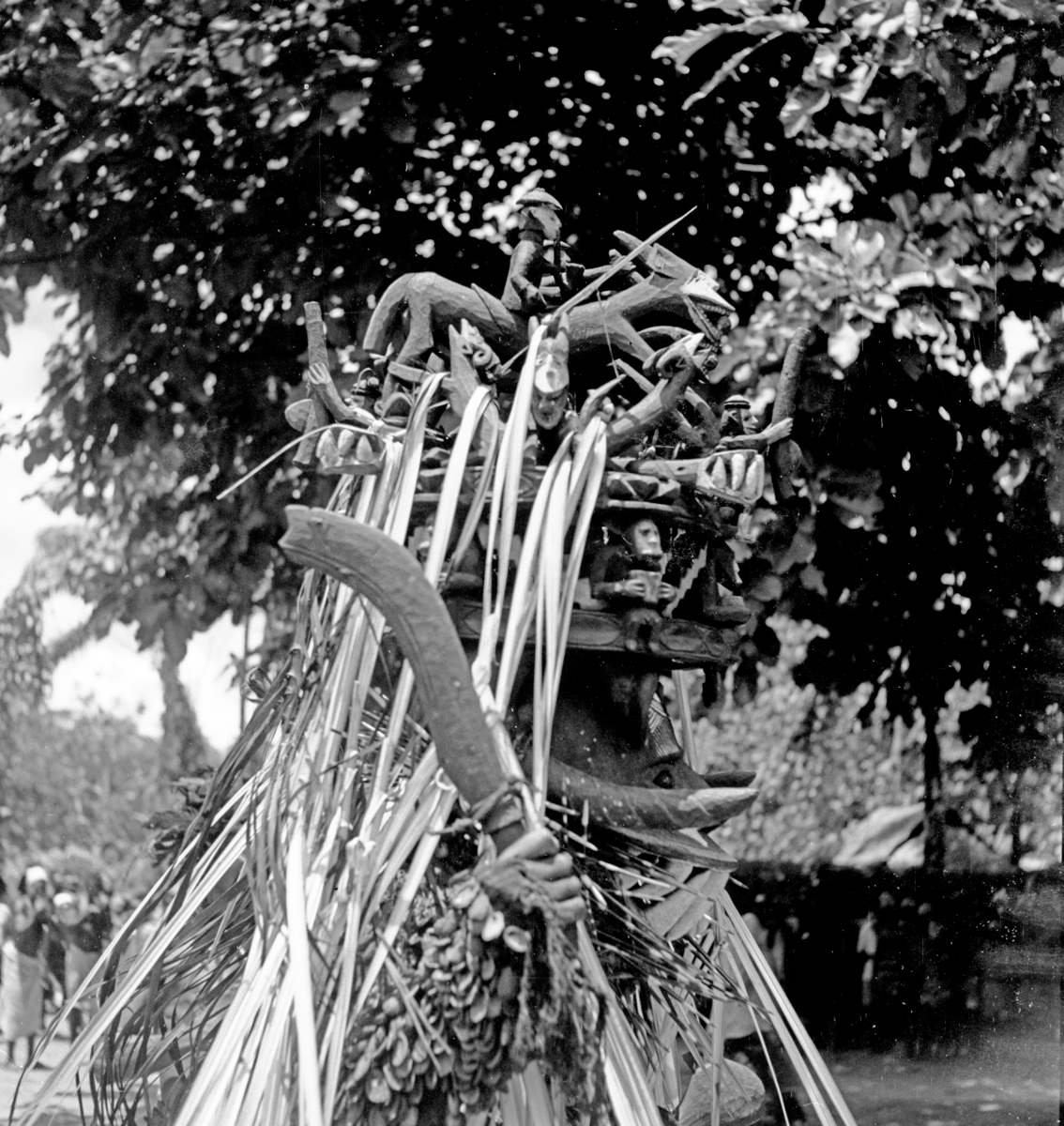
A black-and-white photograph showing a close up view of a Mgbedike (Time of Brave) masquerade. The masquerader wears an elaborate carved headdress featuring horns, human figures, and animals, topped by a figure of a man with a white face riding a horse. The mask is adorned with palm fronds, omu, and the costume is composed of cloth, shells, seeds, and porcupine quills. The masquerader holds a machete or knife. In the background, trees and bystanders are visible. This type of masquerade is associated with spiritual power, aggression, and the ideals of middle aged men, with head-dresses that are analogous to community ikenga superstructures.
Community Notes

Onyeka Nwokike
Nov 26, 2026
The Mgbedike masquerade, also referred to as agaba, translates to "Time of the Brave," "Strong," or "The Brave One Has Landed" (Mgbedike Masquerade: Origins, Cultural Significance, and Traditions). It serves as a symbolic medium for ancestral spirits to communicate with the living, functioning as an embodiment of justice, bravery, and ancestral reverence to enforce social order within the community (Oganochi Mgbedike Masquerader, Nimo).
Onyeka Nwokike
Nov 26, 2026
Eligibility to wear this form of expression was restricted to the strongest men within the community's middle-age grade, typically those between thirty and fifty years old (Iweze of Ogbunike - Mgbedike helmet mask). While this cohort also performed the gentle maiden spirit mask, the Mgbedike is distinguished by its forceful nature and heavy gait.
Onyeka Nwokike
Nov 26, 2026
The elaborate headpiece is attributed by art historians Chike Aniakor and Herbert Cole to an artist named Iweze (Iweze of Ogbunike - Mgbedike helmet mask). In Igbo culture, artists of this caliber are recognized as ndioka, or "men of skill," whose creative works are designed to respond to their specific communal contexts.
Log in to add context.
Explore Further
Discover related books and stories to deepen your understanding.

Igbo Arts: Community and Cosmos
By Herbert M. Cole and Chike G. Aniakor

DIRT ON WHITE SPECTRUM: Myths, Travails and Legacies of Eze …
By Chukwuemeka Ifeanacho Onyesoh

Art of Eastern Nigeria
By G.I. Jones

Igbo Art And Culture: And Other Essays
By Simon Ottenberg

Groundwork of the History and Culture of Onitsha
By S. I. Bosah

Under the Udala Trees
By Chinelo Okparanta

Politics, Culture, and Origins in Nigeria: The Igbo and Their …
By Nwankwo Nwaezeigwe

The King in Every Man: Evolutionary Trends in Onitsha Ibo …
By Richard N. Henderson

IKENGA QUEST: One Man's Quest for His African Heritage
By Gerald Oluchi Ibe
You May Also Like
Wall Painting in Okwu Village
By G.I. Jones
Soldiers of the Royal Niger Company
By William Henry Crosse
Young Igbo Man with Plaited Hairstyle and Uli Body Painting
Calabash Mask, Boys Initiation
By G.I. Jones
Ogbugulu Mau Mask
By G.I. Jones
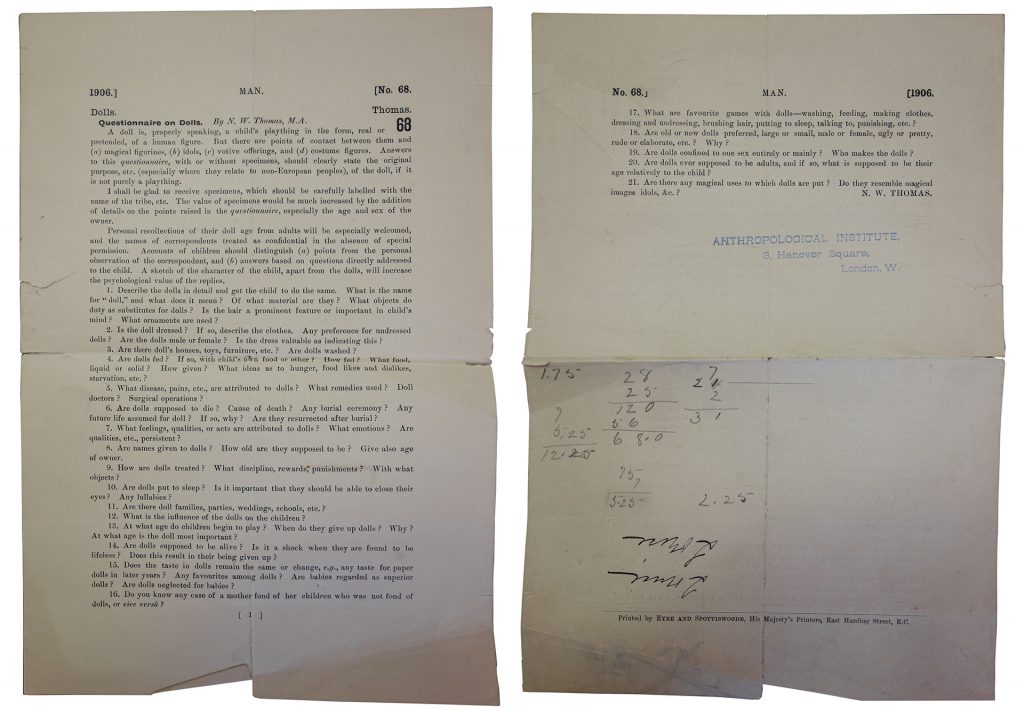
Questionnaire on Dolls
By Northcote Thomas
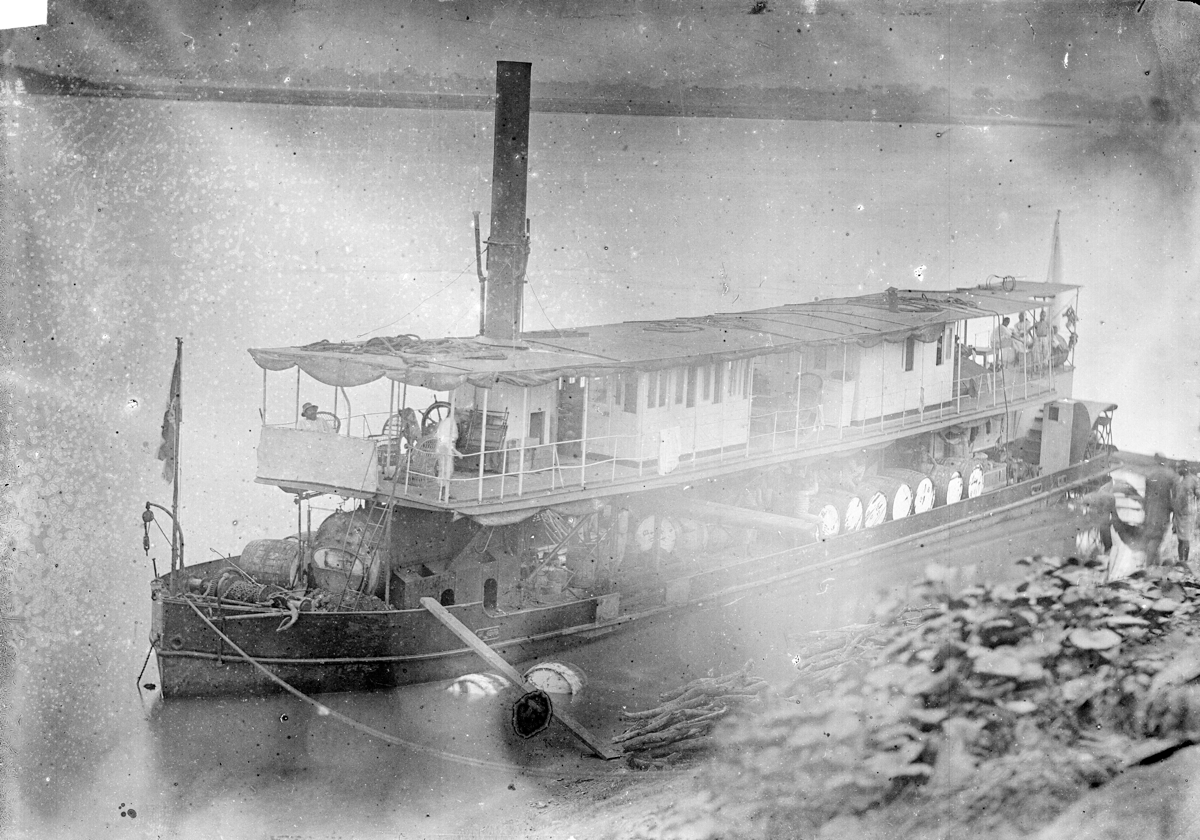
Royal Niger Company Vessel on the Niger River
By William Henry Crosse

Earthwork Structures and Wooden Barrels along the Niger River
By William Henry Crosse
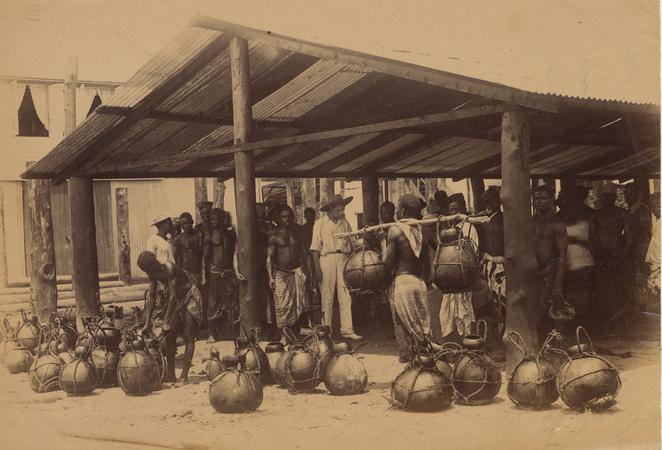
Palm Oil Market Scene in Akwete
By J.A. Green
No comments yet. Be the first to share your thoughts!